

Before there was even the idea for an app or a business behind the app, there was Alessandro Sangiorgi, a native of a small Sicilian commune called Militello in Val di Catania, which boasts a population of about 6,000 people.
Alessandro, at the time, had wanted to attend university in earnest, to get a degree in computer engineering and make a developer out of himself. There was just one hitch.
“I’m from a very tiny town,” Alessandro describes. “There’s no university there.”
So he did what any small-town guy with big dreams does: he set out to get a degree in the nearby, and much larger city of Catania.
But while studying, Alessandro couldn’t help himself. He had to apply all that he was learning to practical matters, to solve some problems out in the real world.
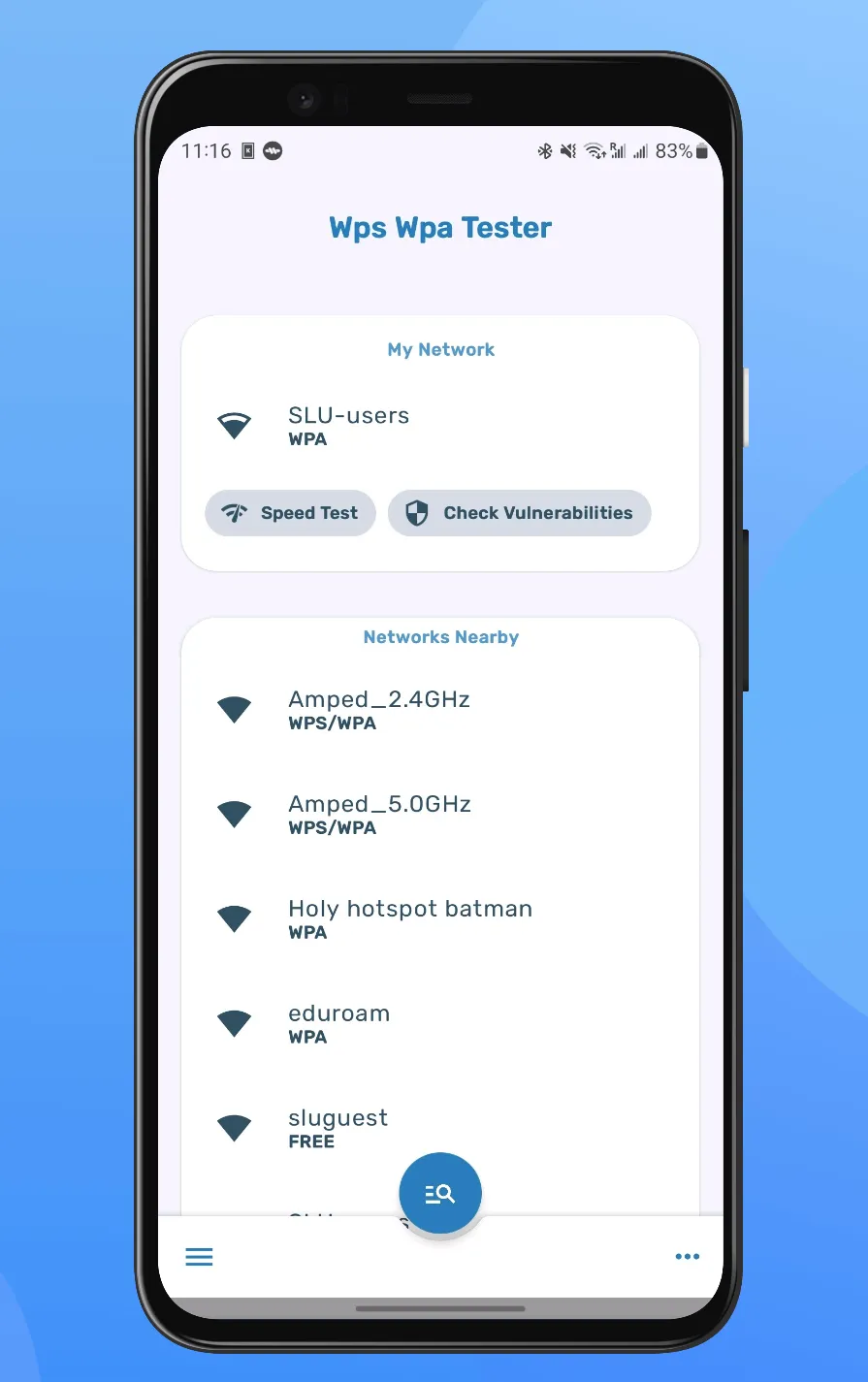
So that’s when he came up with his first app, a rather useful tool with a rather forthright name: WIFI WPS WPA TESTER.
Its mission is to help people test whether their Wi-Fi networks were secure, because, back then, vulnerabilities like WPS exploits were very common. It’s when someone can guess or crack your Wi-Fi password and start using your home’s network as if it were their own, sapping away valuable bandwidth, intercepting traffic, or reaching other devices on the network.
Most folks at the time had no idea their routers might be vulnerable in the first place, or that someone nearby could even gain access to their network without permission (and so easily).
“I built it for a functional purpose, something educational,” Alessandro explains. “So users could see the issue right away, and fix it.”
What happened next, however, blew past Alessandro’s expectations for what he had considered to be only a side quest to his studies all along. Without any marketing budget whatsoever, and with no formalized strategy in mind, the app started growing and kept growing, all organically too.
People were downloading it, telling their friends about it, even reaching out with stories about what they had discovered, all thanks to Alessandro's app.
“I started getting emails from people saying things like, ‘I found out my neighbor was using my Wi-Fi!’” he says.
As it turns out, a significant number of people were wondering the same thing, and that, in turn, kept his organic momentum going, eventually helping the app rack up more than 165 million downloads all over the globe over its lifetime; its users concentrated in APAC, and spread across Europe and the United States too.
It got so big that Alessandro needed to figure out a business model to handle (and capitalize) on his app’s prosperity.